


Choosing a Cooker Hood: Where to Start
Choosing a cooker hood starts with your space and how you cook. Before comparing finishes or picking a favourite design, work out where the extractor will sit, how it will be installed and where the air will go.
This guide gives you a practical starting point, whether you are replacing an existing extractor or planning a completely new installation.
Your starting checklist
Hob position. Extraction route. Available space. Everyday features. Installation requirements.
Answer these five questions before choosing your model.
1. Where is your hob?
The position of your hob helps narrow the choice. Make a simple sketch of the room and mark the hob, nearby walls, windows and any seating area. Think about the view across the room as well as the space directly above the cooking surface.
- Against a wall: start with wall-mounted cooker hoods. Compare the overall shape, chimney height and finish as well as the width.
- Within a run of cabinets: explore canopy cooker hoods for extraction fitted into cabinetry or a suitable housing.
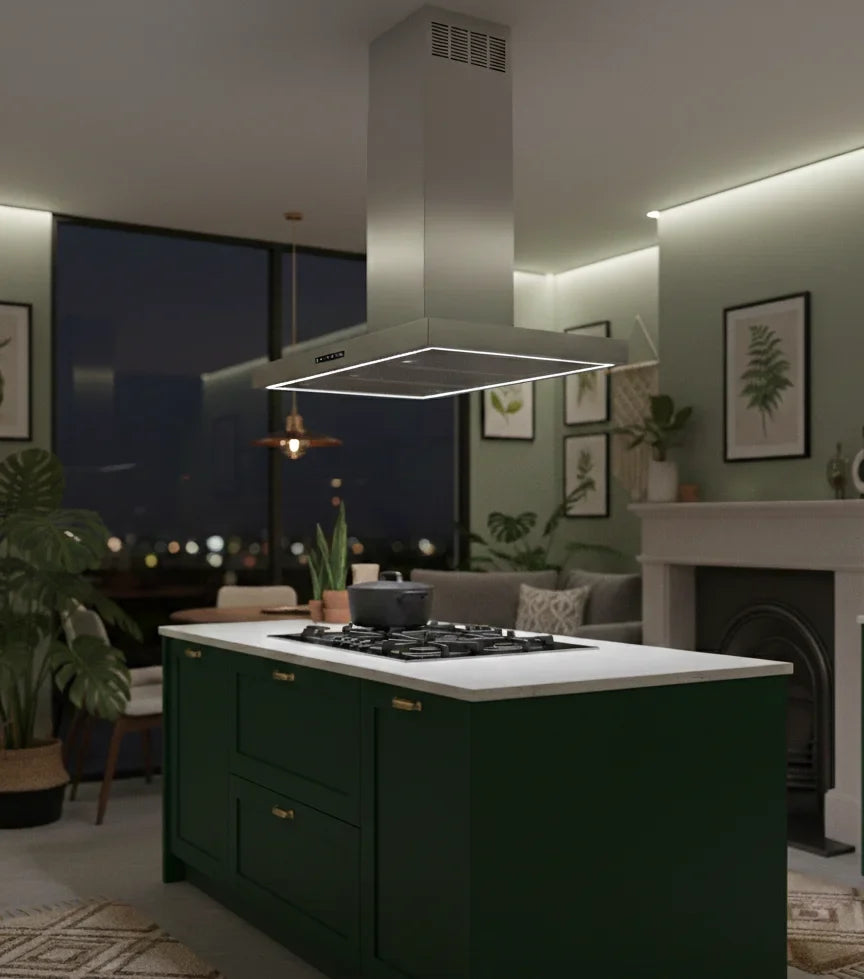
- On an island: compare island cooker hoods with ceiling extractors. One can become a focal point; the other can help keep the overhead view open.
- At worktop level: a downdraft extractor is another option to investigate. Confirm hob compatibility and the space needed below the worktop.
2. Where will the air go?
Decide on the extraction route early. A ducted installation carries extracted air outdoors. A compatible recirculating setup filters the captured air and returns it to the room.
These are different arrangements, so check the exact model rather than assuming every hood supports both. For recirculation, confirm the required odour filters or conversion kit and where the air returns. Recirculation does not remove moisture from the room.
If you plan to duct outside, ask your installer to review the route, outlet and specified duct size before you order. This is especially useful when ceilings, cabinets or floors are still being planned.
3. What space do you actually have?
A product's advertised width is only part of the picture. Check its installation drawing, including the body depth, cut-out, motor position and access needed for servicing and filter removal.
Write down your hob model and dimensions, the available width and the intended height of the extractor. For a ceiling hood, include the ceiling construction and available void. For a canopy, record the internal cabinet dimensions.
Use the hood and hob instructions to confirm the required clearances. A photograph is helpful when discussing a design, but it does not replace measurements.
4. Which features will you use every day?
Picture your normal cooking routine. Do you want controls on the hood or a remote? Would adjustable lighting be useful? How easily can you reach and remove the grease filters?
Compare the published airflow and noise information for the models on your shortlist. Look beyond the headline maximum figure: the settings you expect to use regularly matter too. Installation choices also affect the result, so discuss your proposed setup when asking for advice.
Once the practical requirements are clear, choose the finish. Consider whether you want the extractor to blend into the room or become a visible feature.
5. What needs to be confirmed before ordering?
Keep your shortlist manageable. Two or three suitable models are easier to compare than a long list chosen only by appearance.
- The hood is suitable for the hob and its position.
- The dimensions, mounting arrangement and clearances have been checked.
- The ducting route or recirculation arrangement has been planned.
- The required filters, accessories and installation work are included in your budget.
- You can access the controls, filters and service points after installation.
Replacing an existing cooker hood?
Before choosing a replacement, note the old model number and take photographs of the hood, its surroundings and any accessible duct connection. Check the new model's dimensions and requirements independently; a similar appearance does not guarantee the same fit.
Take the next step
Have your hob details, room measurements and preferred extractor style ready. Use our detailed buying guide to explore the options and find information on surveys and installation support.


